Mastering Rare Steak Temperature

Cooking a rare steak to perfection is an art that many aspire to master. Achieving the ideal rare steak temp ensures a juicy, tender, and flavorful experience that steak lovers crave. Whether you're a beginner or a seasoned cook, understanding the nuances of temperature, timing, and technique is essential. This guide will walk you through everything you need to know to master rare steak temp and impress at your next meal.
Understanding Rare Steak Temp: What You Need to Know
Rare steak is characterized by a warm, red center and a slightly seared exterior. The key to mastering rare steak temp lies in knowing the exact internal temperature to aim for. Typically, rare steak is cooked to an internal temperature of 120°F to 130°F (49°C to 54°C). This temperature range ensures the meat is cooked enough to be safe but still retains its juicy, tender texture.
Using a reliable meat thermometer is crucial. Insert the thermometer into the thickest part of the steak to get an accurate reading. Avoid touching bone or fat, as this can give a false temperature.
Why Temperature Matters
Cooking steak to the right temperature affects:
Texture: Rare steak is soft and tender, with a slight chew.
Juiciness: Lower temperatures retain more moisture.
Flavor: The Maillard reaction on the outside creates a rich, savory crust.
Overcooking a rare steak can quickly turn it into medium or well-done, losing the qualities that make rare steak special.

Image caption: Close-up of a rare steak cooking on a grill showing perfect sear marks.
Tools and Techniques for Achieving the Perfect Rare Steak Temp
To master rare steak temp, you need the right tools and techniques. Here’s what you should have on hand:
Meat Thermometer: Digital instant-read thermometers are best for quick, accurate readings.
Cast Iron Skillet or Grill: These provide even heat and excellent searing.
Tongs: For flipping the steak without piercing it.
Timer: To keep track of cooking time.
Preparing Your Steak
Bring to Room Temperature: Let your steak sit out for 20-30 minutes before cooking. This helps it cook evenly.
Season Generously: Use salt and pepper or your favorite steak rub.
Preheat Your Cooking Surface: Ensure your skillet or grill is hot before placing the steak on it.
Cooking Process
Sear the steak for about 2-3 minutes on each side.
Use the thermometer to check the internal temperature.
Remove the steak from heat once it reaches 120°F to 130°F.
Let it rest for 5 minutes to allow juices to redistribute.
How do you cook a perfect rare steak?
Cooking a perfect rare steak requires attention to detail and timing. Here’s a step-by-step guide:
Choose the Right Cut: Ribeye, filet mignon, and sirloin are excellent choices for rare steak.
Season Well: Salt enhances flavor and helps form a crust.
Preheat Your Pan or Grill: High heat is essential for a good sear.
Sear Each Side: Cook for 2-3 minutes per side without moving the steak.
Check Temperature: Use your thermometer to ensure the steak reaches the rare steak temp range.
Rest the Steak: Resting is crucial to keep the steak juicy.
Tips for Perfection
Avoid pressing down on the steak while cooking; this squeezes out juices.
Use a cast iron skillet for even heat distribution.
If cooking thicker cuts, consider finishing in the oven at 400°F for a few minutes after searing.
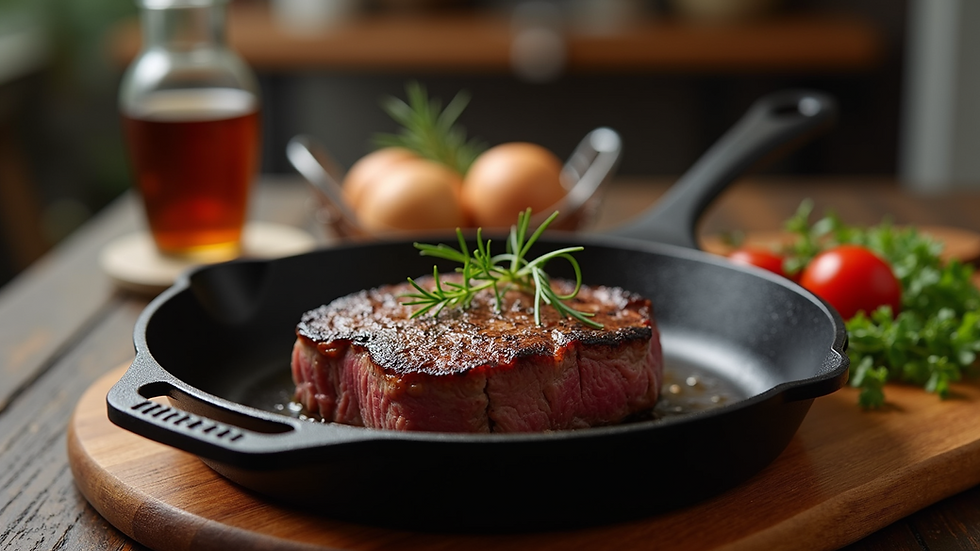
Image caption: Rare steak resting on a wooden board after cooking in a cast iron skillet.
Common Mistakes to Avoid When Cooking Rare Steak
Even experienced cooks can make mistakes when aiming for rare steak temp. Here are some pitfalls to watch out for:
Not Using a Thermometer: Guessing can lead to over or undercooking.
Cooking Steak Straight from the Fridge: Cold meat cooks unevenly.
Overcrowding the Pan: This lowers the temperature and prevents proper searing.
Skipping the Resting Period: Cutting too soon causes juices to escape.
Using Low Heat: Searing requires high heat to develop flavor and texture.
Avoiding these mistakes will help you consistently achieve the perfect rare steak.
Enhancing Your Rare Steak Experience: Serving and Pairing Ideas
Once you’ve mastered the rare steak temp, it’s time to think about how to serve and enjoy your steak.
Serving Suggestions
Slice the steak against the grain for maximum tenderness.
Add a pat of herb butter or a drizzle of olive oil for extra richness.
Serve with classic sides like roasted vegetables, mashed potatoes, or a fresh salad.
Pairing Recommendations
Red Wine: A bold Cabernet Sauvignon or Malbec complements the rich flavors.
Beer: A dark stout or porter pairs well with the charred crust.
Sauces: Béarnaise, chimichurri, or a simple garlic butter sauce enhance the steak without overpowering it.
Storage Tips
If you have leftovers, store steak in an airtight container in the refrigerator for up to 3 days. Reheat gently to avoid overcooking.
Final Thoughts on Mastering Rare Steak Temp
Mastering the rare steak temp is about precision, patience, and practice. By understanding the ideal temperature range, using the right tools, and following proper cooking techniques, you can enjoy a perfectly cooked rare steak every time. Remember, the key is to monitor the internal temperature closely and allow the steak to rest before serving.
For more tips and detailed guides on cooking steaks and other culinary delights, check out this rare steak temperature resource.
Enjoy your cooking journey and savor every bite of your perfectly cooked rare steak!


Comments